Start typing to find a pose by its English or Sanskrit name.
Live Guided Flows
Full flowing sequences with real-time guidance and auto-advancing poses. Each flow chains poses together with spoken cues so you can move without breaking your practice to read the screen.
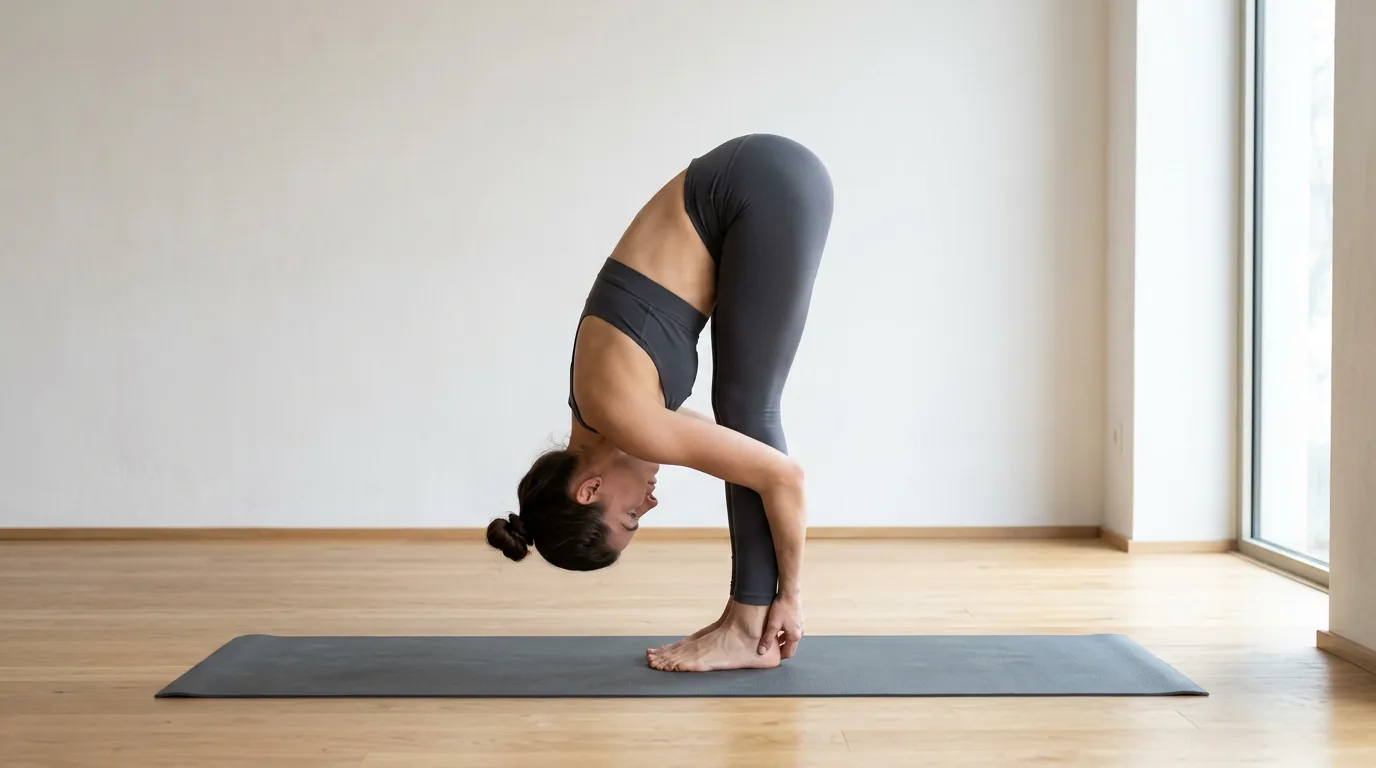
Ashtanga Standing Sequence (Primary Series)
Forward folds, triangles and side angles on both sides, the wide-legged folds, the balances, Chair and the Warriors — in the traditional order

Sun Salutation A (Surya Namaskar A)
Ashtanga Vinyasa — 12 poses, scored live and auto-advancing
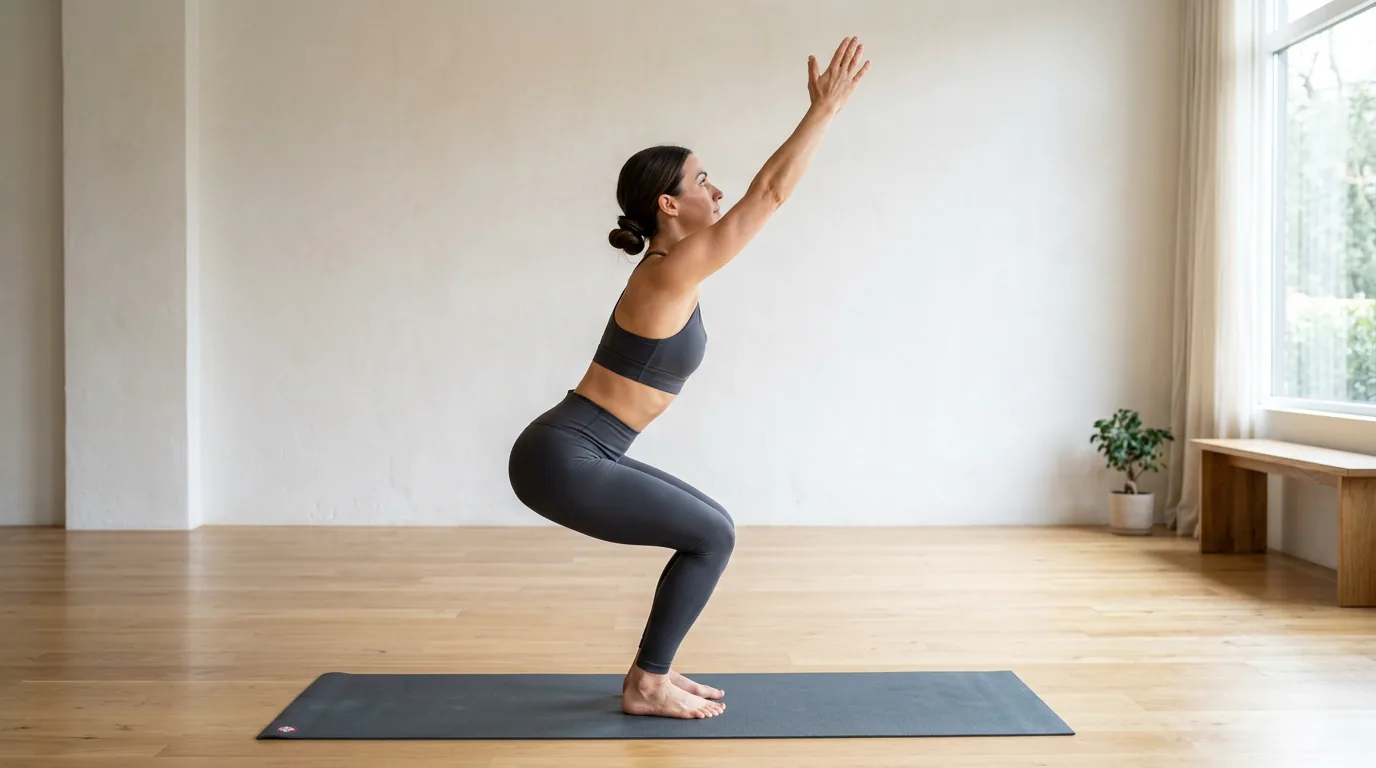
Sun Salutation B (Surya Namaskar B)
Chair Pose and Warrior I on each side, linked by three vinyasas — the second Ashtanga sun salutation
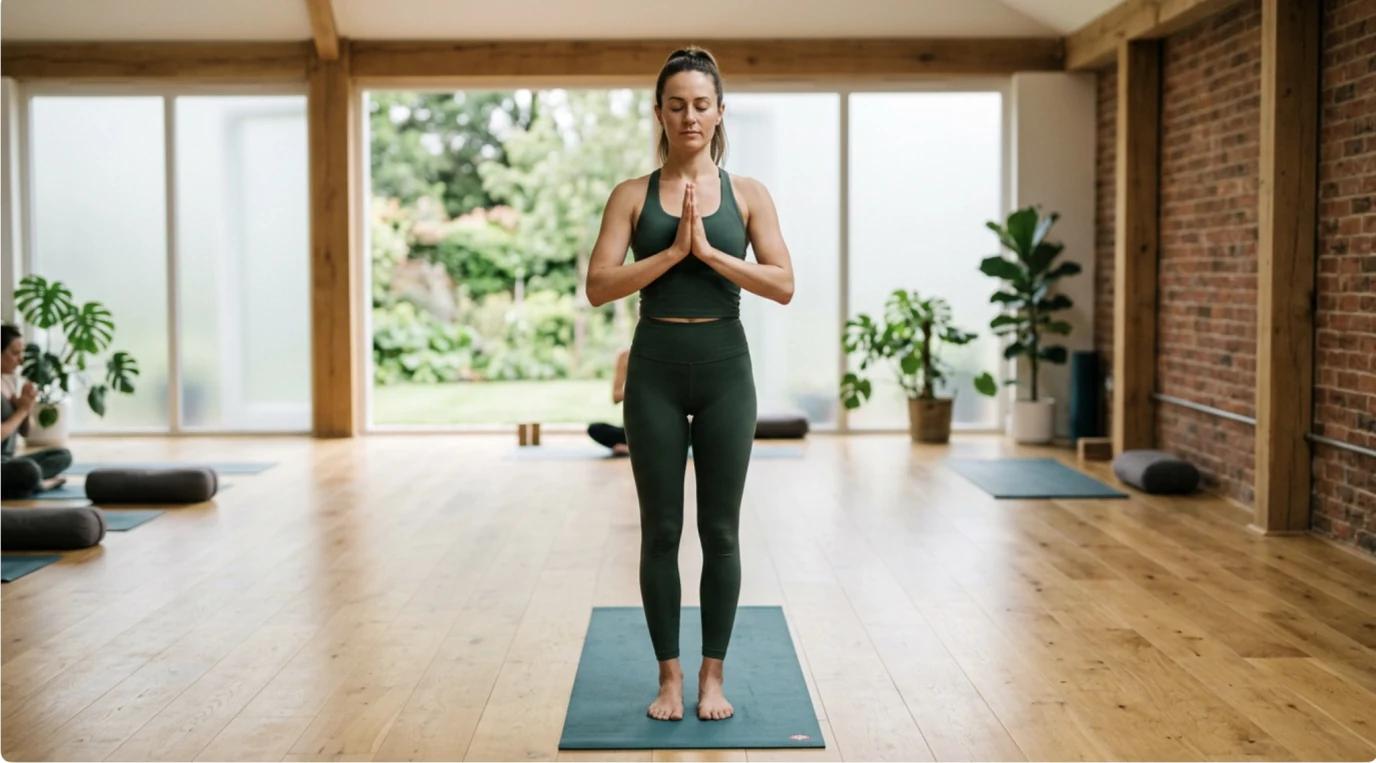
Surya Namaskar (Classical Hatha)
The traditional 12 steps — prayer, low lunge, knees-chest-chin, Cobra

Warrior Flow (Virabhadrasana Vinyasa)
Warrior I, Humble Warrior, Warrior II, Reverse Warrior, Side Angle and Warrior III — both sides
Beginner Foundation Poses
Perfect for those new to yoga. These poses build body awareness, improve balance, and establish the alignment fundamentals that every other pose builds upon. No prior experience needed.

Mountain Pose (Tadasana)
The foundation of all standing poses. Teaches proper posture, weight distribution, and full-body awareness.

Prayer Pose (Pranamasana)
A centering pose that calms the mind, opens the chest, and brings awareness to breath and posture.

Tree Pose (Vrksasana)
A balance pose that strengthens legs and core while improving focus and concentration.
Upward Salute (Urdhva Hastasana)
Mountain Pose with the arms reaching overhead — lengthens the spine, opens the chest, and is a key Sun Salutation transition.
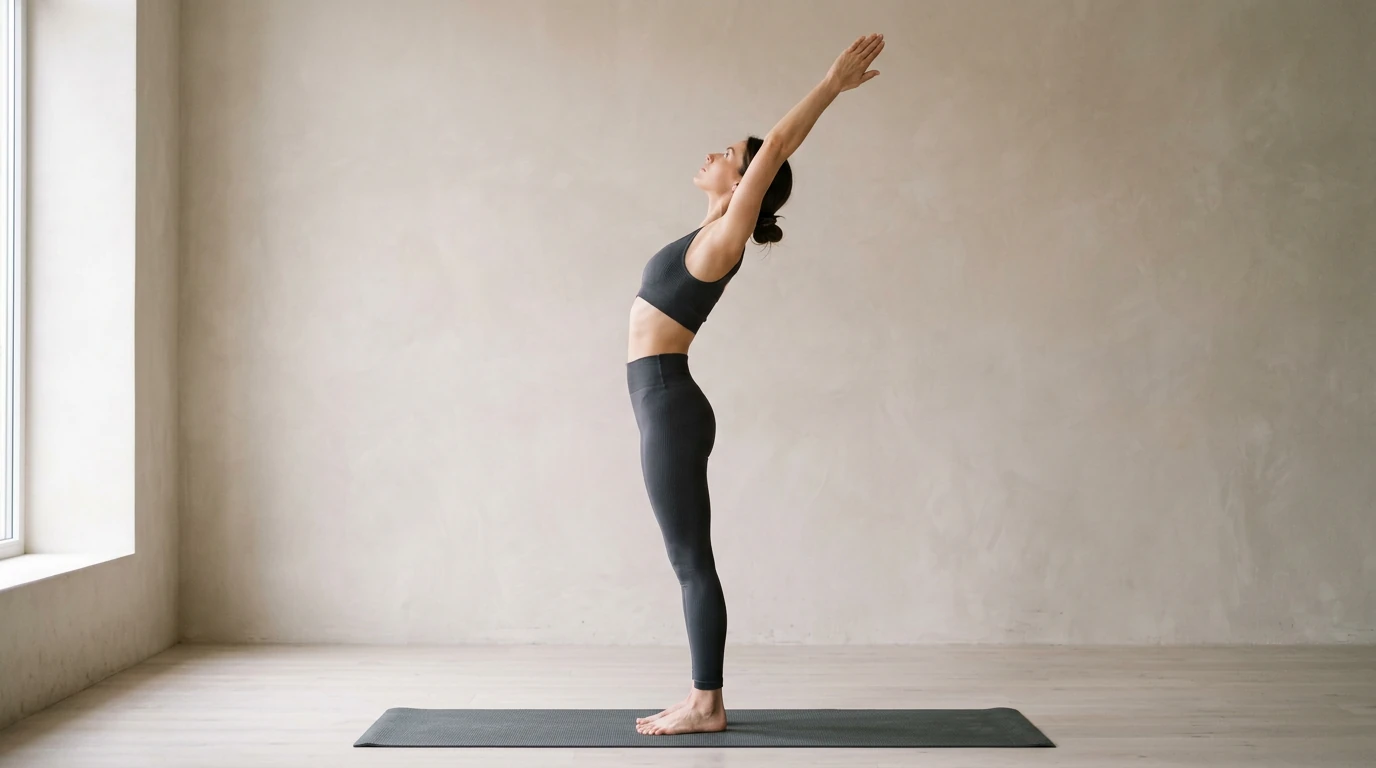
Raised Arms Pose (Hastauttanasana)
Arms straight beside the ears, arching back with the chest in a gentle backbend — step 2 of the classical Surya Namaskar.

Standing Forward Fold (Uttanasana)
A forward bend that lengthens the hamstrings and spine, releases the neck and shoulders, and calms the mind.

Half Lift (Ardha Uttanasana)
The halfway-up position with a long, flat back — extends the spine and preps the body between folds in a Sun Salutation.
Intermediate Strength & Flexibility
Ready for more challenge? These poses build core strength, spinal flexibility, and deeper body control. Recommended after you're comfortable with the foundation poses.

Cobra Pose (Bhujangasana)
A back-bending pose that strengthens the spine, opens the chest, and relieves lower back stiffness.

Boat Pose (Navasana)
A core-strengthening pose that challenges balance, builds abdominal power, and improves hip flexor flexibility.

Half Lord of the Fishes
A seated twist that improves spinal mobility and stretches the shoulders and hips.

Plank Pose (Phalakasana)
A core and arm strengthening hold that builds full-body stability and is a key Sun Salutation transition.

Four-Limbed Staff Pose (Chaturanga Dandasana)
The low-plank of a vinyasa — elbows hug the ribs as you lower halfway, building deep arm, core, and shoulder strength.

Upward-Facing Dog (Urdhva Mukha Svanasana)
A backbend where the chest lifts and thighs hover off the floor — opens the chest and shoulders and strengthens the arms and spine.
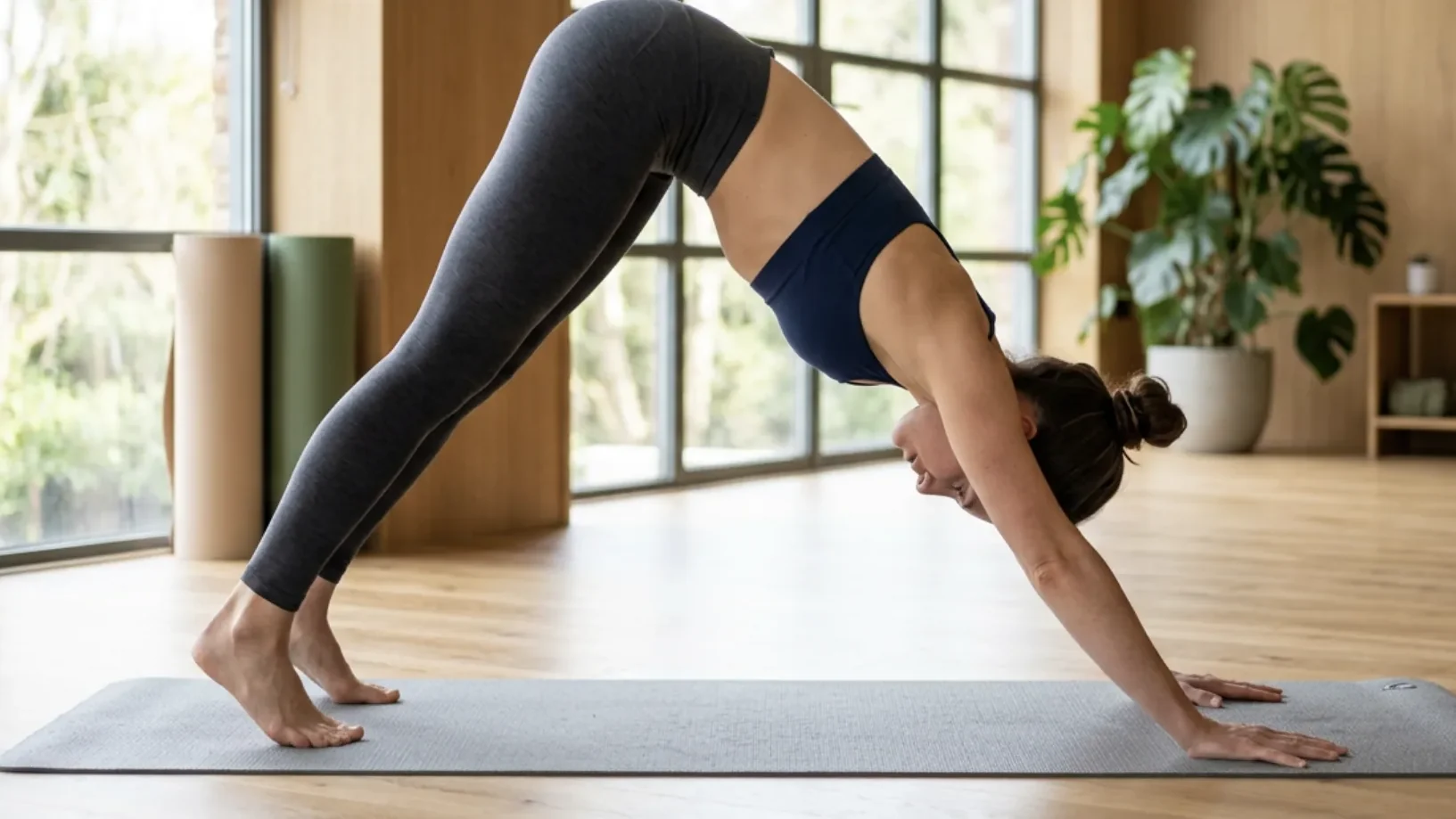
Downward-Facing Dog (Adho Mukha Svanasana)
The inverted V — hands and feet press down as the hips lift, lengthening the spine and stretching the hamstrings and calves.
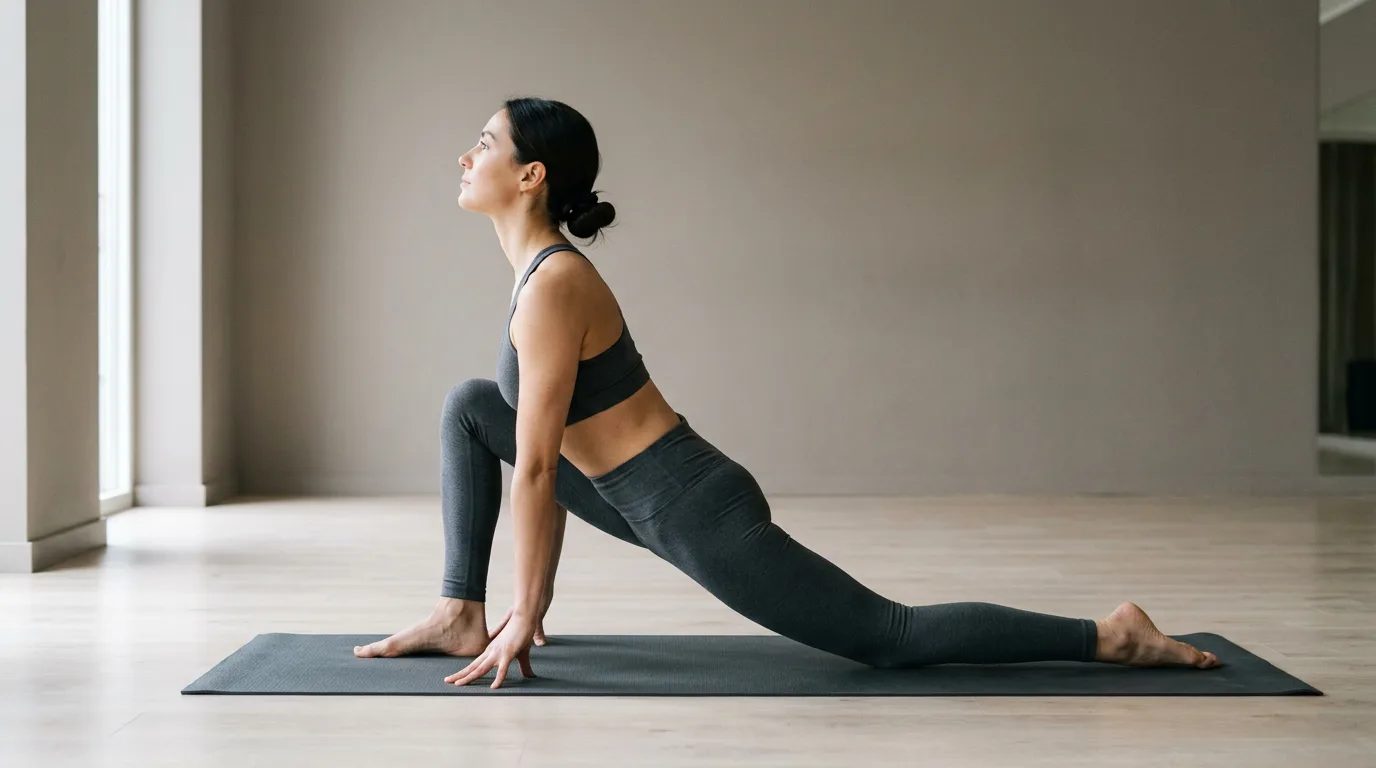
Equestrian Pose (Ashwa Sanchalanasana)
The low lunge of the classical Surya Namaskar — back knee on the mat, front knee over the ankle, chest lifted.
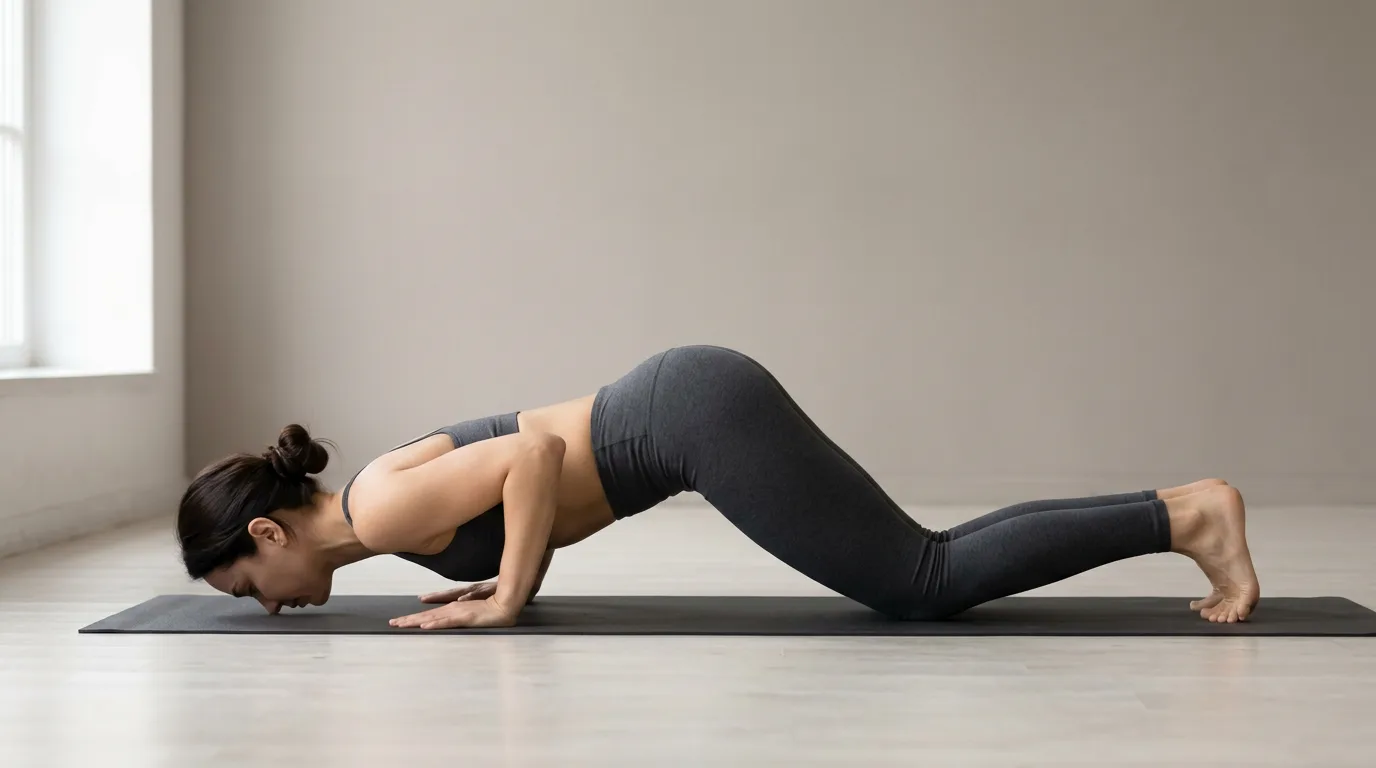
Eight-Point Salute (Ashtanga Namaskara)
Knees, chest and chin to the mat with the hips lifted — step 6 of the classical Surya Namaskar.
Intermediate Warrior Series
The Warrior poses build leg strength, open the hips, and develop stamina. They're the backbone of most yoga flows and prepare you for advanced standing sequences.

Warrior I (Virabhadrasana I)
A powerful standing lunge that strengthens quads, opens hip flexors, and builds upper body reach.
Warrior II (Virabhadrasana II)
Opens the hips and shoulders, builds endurance in the legs, and develops focused concentration.

Warrior III (Virabhadrasana III)
An advanced balance pose that strengthens the standing leg, core, and back while challenging stability.
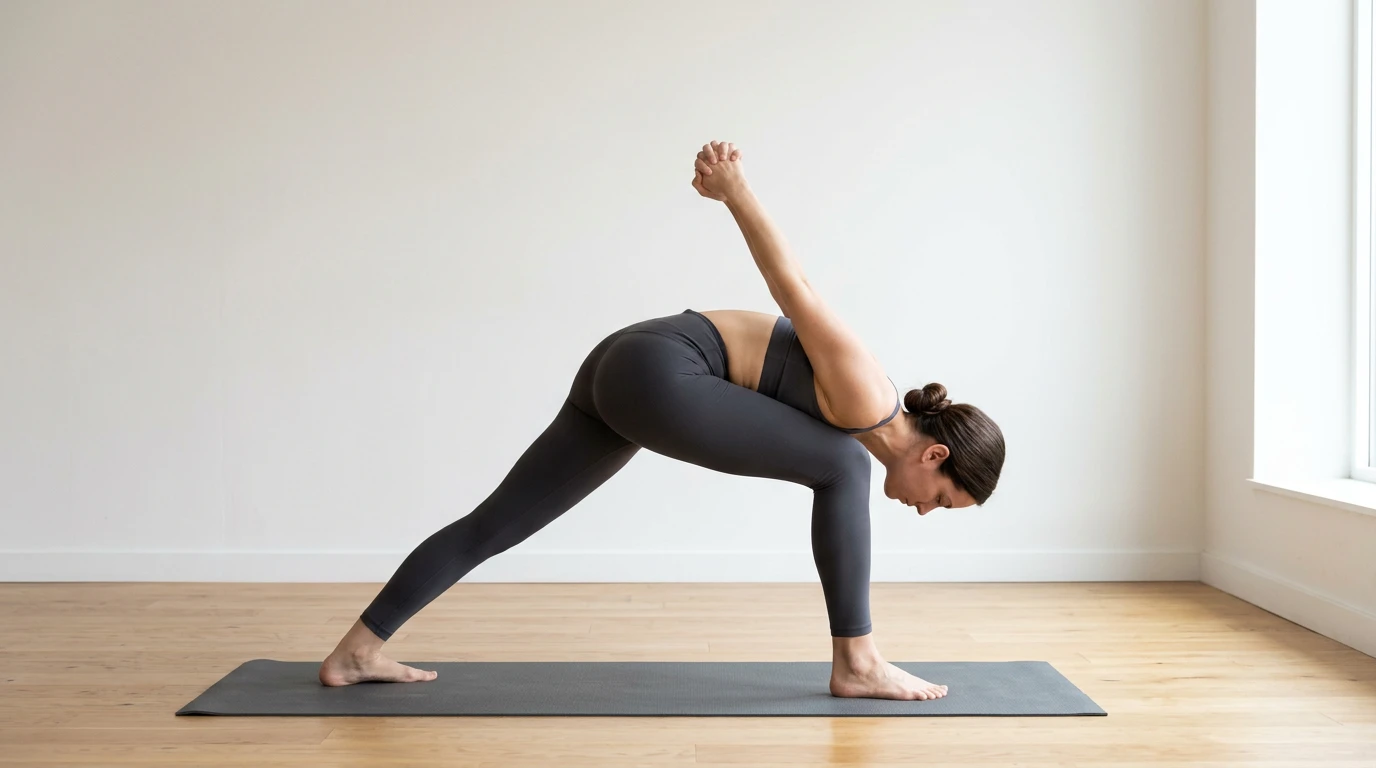
Humble Warrior (Baddha Virabhadrasana)
A deep bow from Warrior I with the hands clasped behind the back, opening the hips and shoulders.
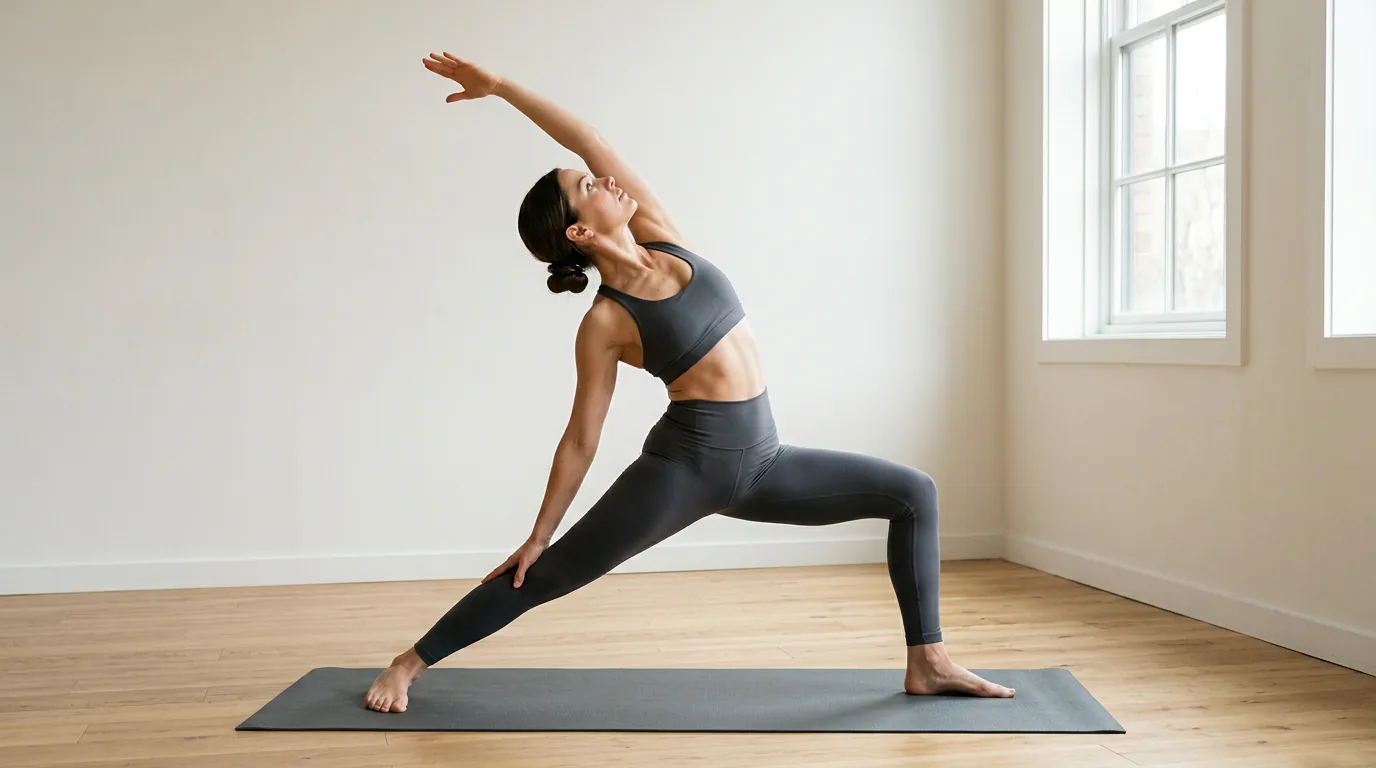
Reverse Warrior (Viparita Virabhadrasana)
From Warrior II, the front arm reaches up and back into a long side-body stretch.
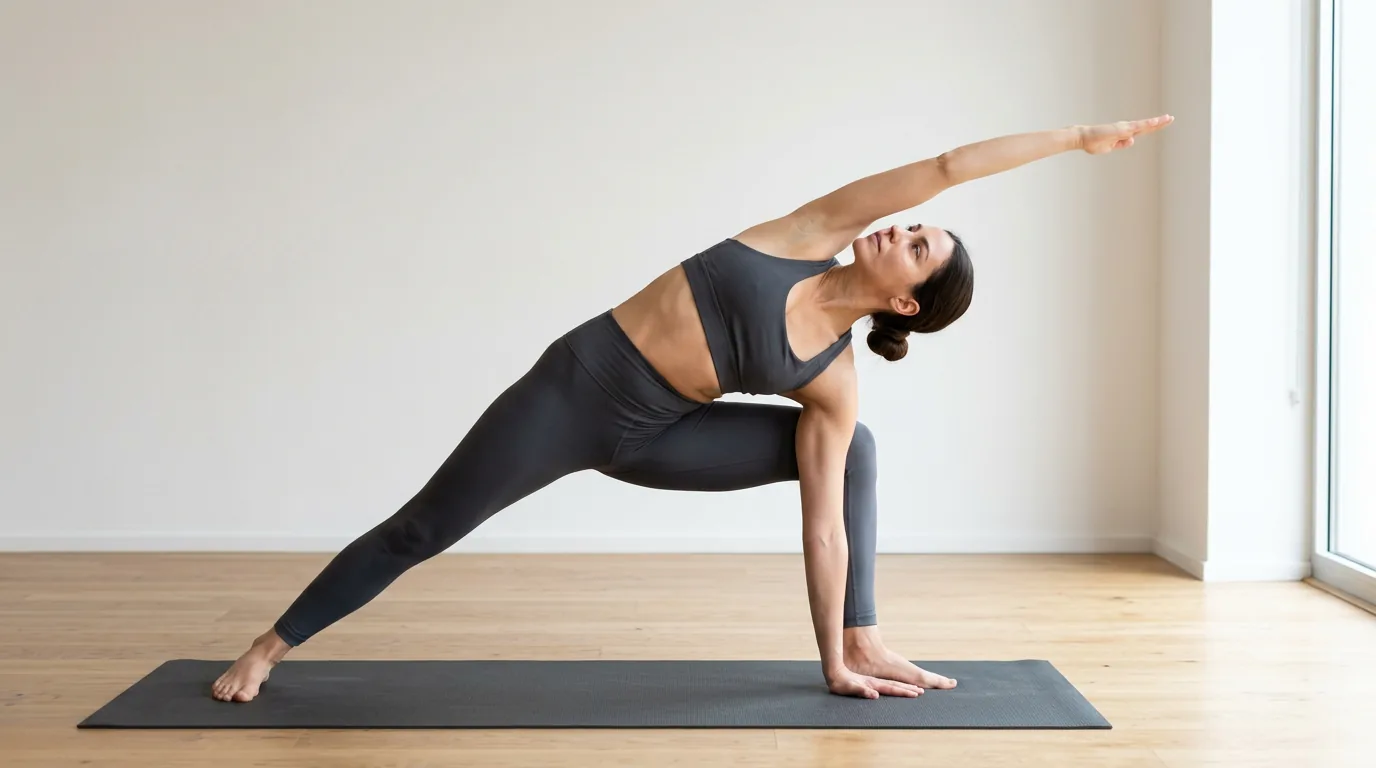
Extended Side Angle (Utthita Parsvakonasana)
From Warrior II, the torso tilts over the front thigh in one long line from heel to fingertips.
Ashtanga Ashtanga · Standing Sequence
The standing sequence of the Ashtanga Primary Series: forward folds, triangles and twists that build the strength, length and balance the seated poses need. Each pose is held for five breaths.
Big Toe Pose (Padangusthasana)
A standing forward fold from the start of the Ashtanga standing sequence: with the legs straight, the torso folds from the hips and the first two fingers hook the big toes.
Hand Under Foot Pose (Padahastasana)
A standing forward fold that follows Padangusthasana in Ashtanga: with the legs straight, both palms slide under the feet, toes to the wrist creases, and the torso folds deeply onto the legs.
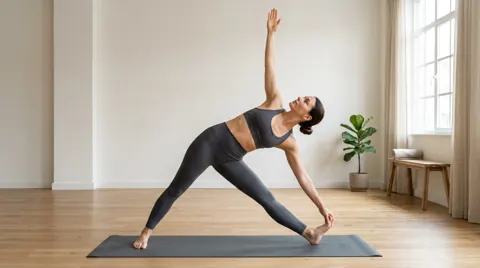
Extended Triangle Pose (Utthita Trikonasana)
A standing pose with the legs wide and straight: the torso tilts sideways over the front leg, the front hand holds the big toe and the top arm reaches straight up, so both arms form one vertical line.
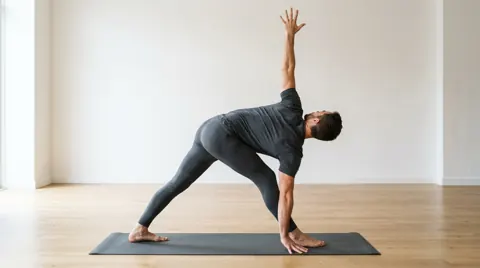
Revolved Triangle Pose (Parivrtta Trikonasana)
A standing twist with the legs wide and straight: the torso turns towards the front leg, the back-side hand is placed on the floor outside the front foot and the other arm points straight up.
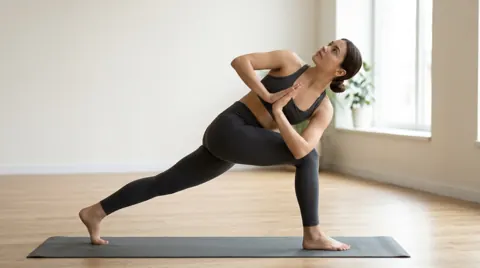
Revolved Side Angle Pose (Parivrtta Parsvakonasana)
A deep standing twist from a lunge: the front knee bends to 90°, the back leg stays straight, the back-side elbow hooks outside the front knee and the palms press together at the chest as the gaze turns up.
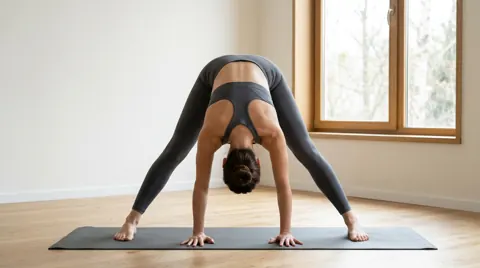
Prasarita Padottanasana A
A wide-legged standing forward fold: with the feet wide and legs straight, the palms rest flat on the floor between the feet and the crown of the head draws towards the floor.
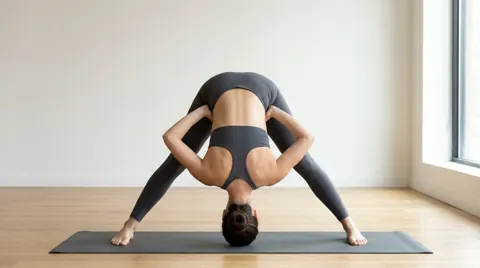
Prasarita Padottanasana B
A wide-legged standing forward fold with the hands resting on the hips: the feet are wide, the legs straight, and the crown of the head draws towards the floor.
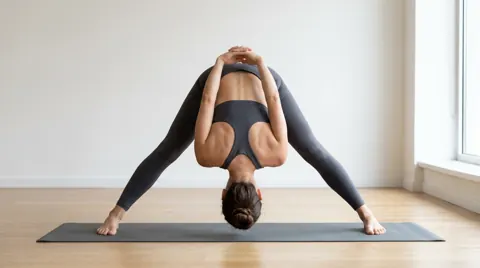
Prasarita Padottanasana C
A wide-legged standing forward fold with the hands clasped behind the back: as the torso folds, the straight arms fall over the head towards the floor.
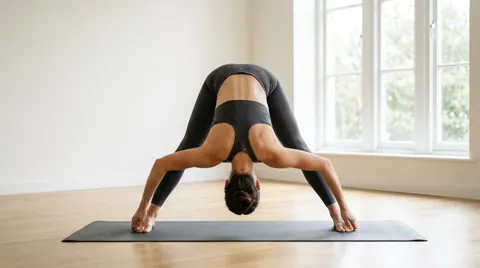
Prasarita Padottanasana D
A wide-legged standing forward fold in which each hand holds a big toe: the elbows bend out to the sides and the crown of the head draws towards the floor.
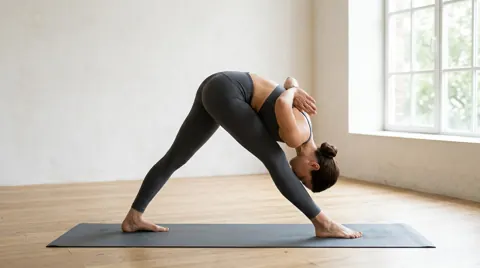
Intense Side Stretch (Parsvottanasana)
A standing forward fold over the front leg: the feet are about a metre apart, the hips square to the front, both legs straight, and the hands rest in reverse prayer behind the back.
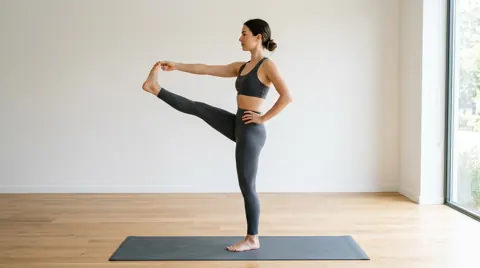
Extended Hand-to-Big-Toe Pose (Utthita Hasta Padangusthasana)
A standing balance: on one straight leg, the other leg lifts straight forward to hip height, held by the big toe, with the free hand on the hip and the torso upright.
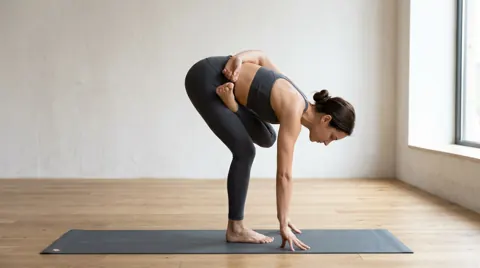
Half Bound Lotus Forward Fold (Ardha Baddha Padmottanasana)
A standing balance and forward fold: one leg rests in half lotus with the foot at the hip crease, the same-side arm binds behind the back to hold that foot, and the free hand rests on the floor beside the standing foot.
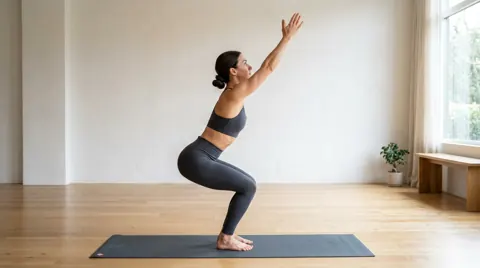
Chair Pose (Utkatasana)
A powerful standing pose in which the knees bend deeply as if sitting into a chair, with the feet together, the torso leaning slightly forward and the arms reaching overhead with palms together.
Ashtanga Ashtanga · Primary Series (Seated)
The heart of the Primary Series (Yoga Chikitsa): forward bends, binds and hip openers, practised in the traditional order. Some are advanced — practise them with a teacher and never force a bind.
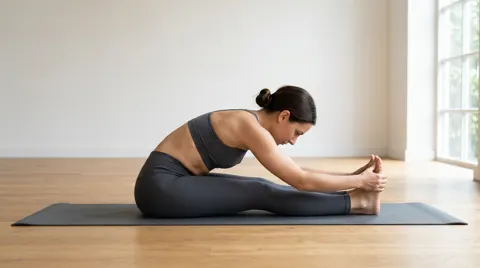
Seated Forward Bend (Paschimottanasana)
A seated forward fold: both legs are straight and together in front, and the torso folds forward from the hips over the legs with the hands holding the feet.
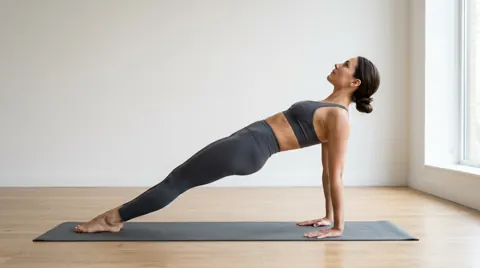
Upward Plank (Purvottanasana)
A reverse plank that opens the whole front of the body: hands and feet on the floor, hips lifted so the body forms one long line from the shoulders to the feet, chest facing the ceiling.
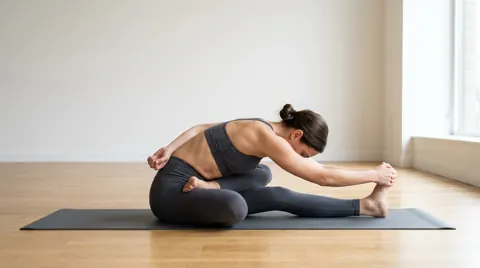
Half Bound Lotus Forward Bend (Ardha Baddha Padma Paschimottanasana)
A seated forward fold with one leg in half lotus: the arm on the lotus side wraps behind the back to hold that foot, and the torso folds over the straight leg.
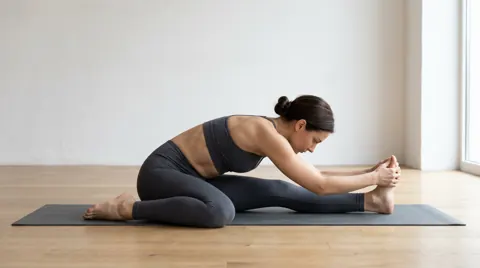
Three-Limbed Forward Bend (Tiriang Mukha Eka Pada Paschimottanasana)
A seated forward fold with one leg folded back as in Hero Pose: the bent leg's shin rests on the mat with the foot beside the outside of the hip, and the torso folds over the straight leg.
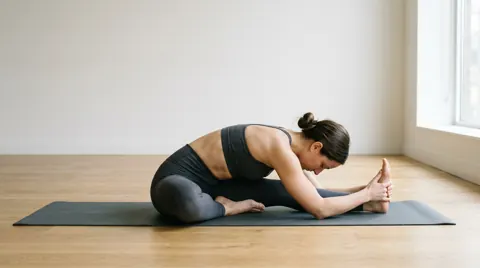
Head-to-Knee Pose A (Janu Sirsasana A)
A seated one-legged forward fold: one leg is straight in front while the other knee bends out to the side with the sole against the inner thigh, and the torso folds over the straight leg.
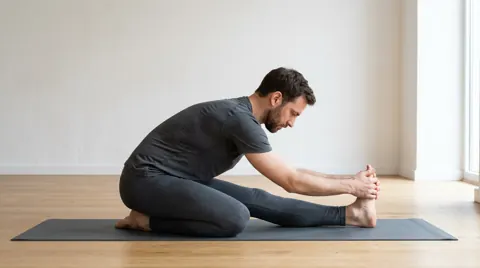
Head-to-Knee Pose B (Janu Sirsasana B)
A variation of Head-to-Knee Pose in which you sit on the heel of the bent leg, so that hip is slightly lifted, and fold forward over the straight leg.
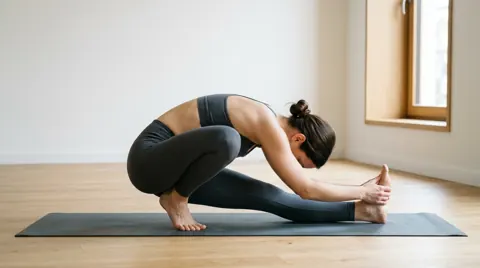
Head-to-Knee Pose C (Janu Sirsasana C)
A demanding Head-to-Knee variation: the bent leg's toes are tucked and pressed into the floor beside the straight thigh with the heel pointing up, and the torso folds over the straight leg.
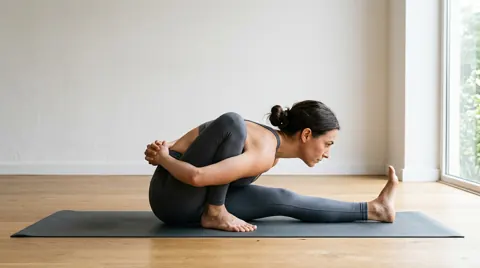
Marichyasana A
A seated forward fold with a bind: one knee is bent up with the foot flat, that arm wraps around the bent shin to clasp the other hand behind the back, and the torso folds over the straight leg.
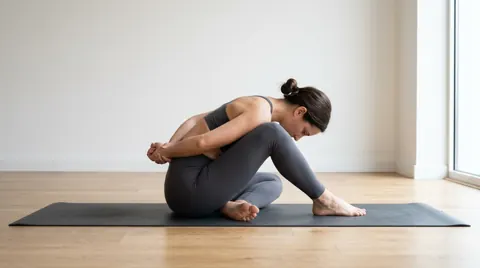
Marichyasana B
A bound forward fold combining a half lotus with a bent knee: one foot rests on the opposite hip, the other knee is bent up with the foot flat, the arms bind around the bent knee and the torso folds forward.
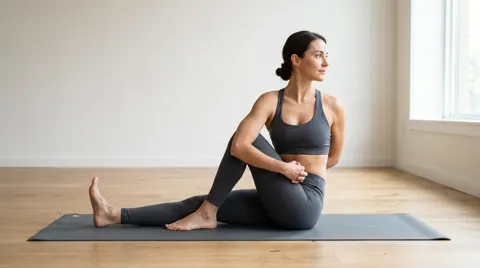
Marichyasana C
A seated bound twist: one leg is straight, the other knee is bent up with the foot flat, the torso turns towards the bent knee and the opposite arm wraps around the outside of the knee to bind behind the back.
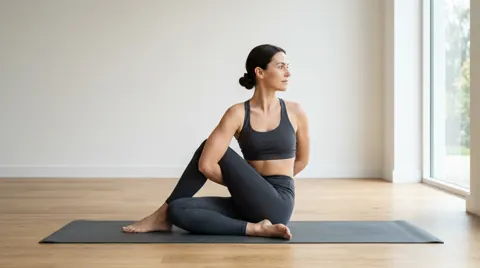
Marichyasana D
A deep seated bound twist combining a half lotus with a bent knee: the torso turns towards the bent knee and the opposite arm wraps around it to bind behind the back.
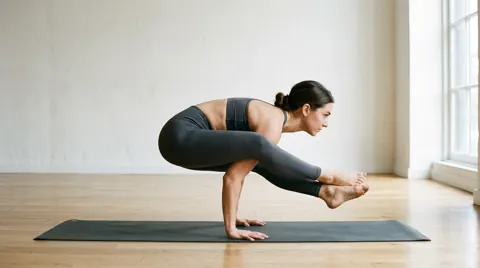
Shoulder-Pressing Pose (Bhujapidasana)
An arm balance in which the backs of the thighs rest on the upper arms, the ankles cross in front and the whole body balances on the hands.
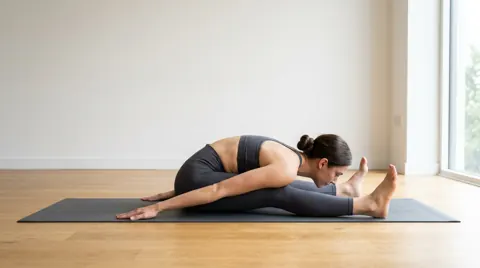
Tortoise Pose (Kurmasana)
A deep seated forward fold in which the legs are wide, the arms reach out under the knees and the chest and shoulders lie towards the floor between the legs.
Sleeping Tortoise Pose (Supta Kurmasana)
An advanced, compact forward fold that develops from Tortoise Pose: the chest is on the floor, the hands bind behind the lower back and the ankles cross behind the head.
Embryo in the Womb Pose (Garbha Pindasana)
An advanced lotus pose in which both arms thread through the gaps between the thighs and calves, the hands hold the ears and you balance on your sitting bones.
Rooster Pose (Kukkutasana)
An advanced arm balance in full lotus: both arms thread through the legs up to the elbows, the palms press flat on the floor and the whole body lifts off the ground.
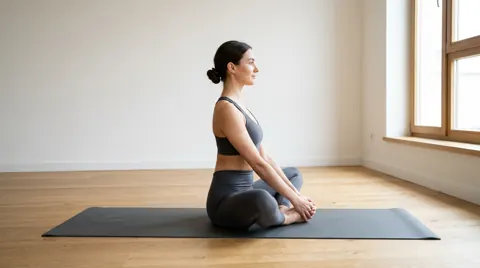
Bound Angle Pose A (Baddha Konasana A)
A seated hip opener: the soles of the feet press together close to the pelvis, the knees open wide towards the floor and the spine stays upright.
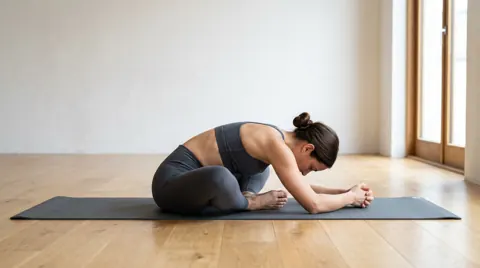
Bound Angle Pose B (Baddha Konasana B)
The forward-folding version of Bound Angle Pose: with the soles of the feet together and the knees wide, the torso folds forward from the hips towards the feet.
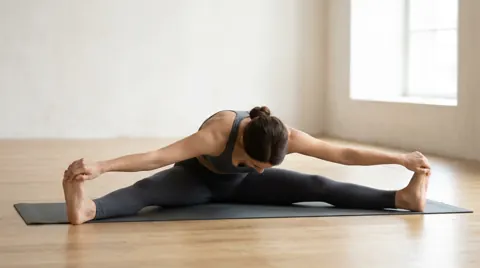
Wide-Angle Seated Forward Bend (Upavistha Konasana A)
A seated wide-legged forward fold: the straight legs open in a wide V, the hands hold the outer edges of the feet and the chest folds towards the floor between the legs.
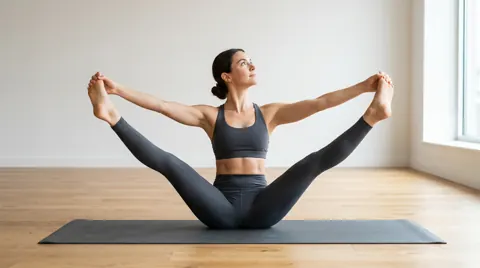
Wide-Angle Seated Balance (Upavistha Konasana B)
A seated balance in which you rest on the sitting bones with the straight legs lifted in a wide V, holding the big toes with the chest lifted and the gaze up.
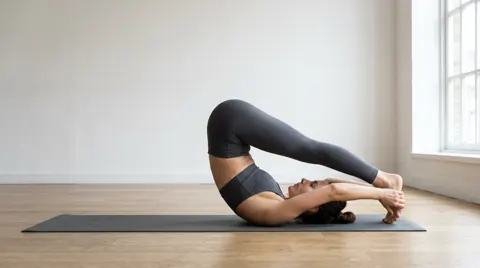
Reclining Angle Pose (Supta Konasana)
A reclining inversion in which you lie on your back with the hips over the shoulders and the straight legs taken over the head in a wide V, toes on the floor and hands holding the big toes.
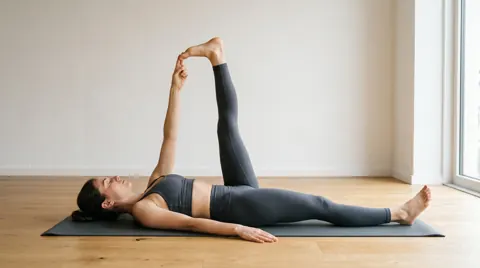
Reclining Hand-to-Big-Toe Pose (Supta Padangusthasana)
A reclining hamstring stretch: lying on your back with one leg straight on the floor, the other straight leg lifts towards the face while the same-side hand holds its big toe.
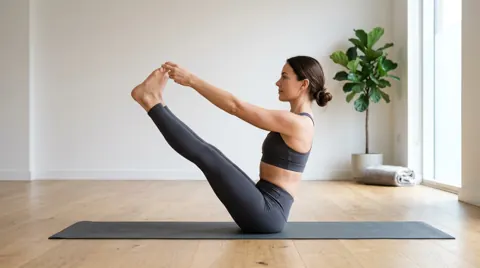
Ubhaya Padangusthasana
A seated balance from the Ashtanga Primary Series: balancing on the sitting bones with both legs straight and lifted, each hand holding a big toe, the body forms a narrow V.
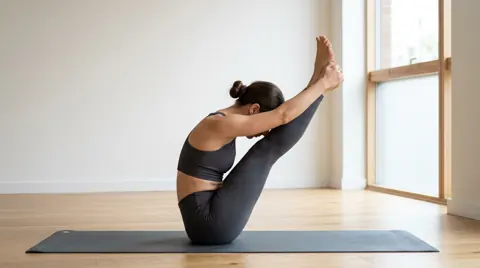
Urdhva Mukha Paschimottanasana
An upward-facing seated forward fold from the Ashtanga Primary Series: balancing on the sitting bones with straight legs lifted almost vertical, the hands hold the outer edges of the feet and the torso draws in towards the legs.
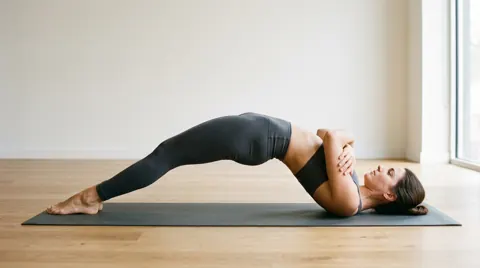
Setu Bandhasana
The Ashtanga version of Bridge Pose, which ends the Primary Series: with heels together and feet turned out, the hips lift so the body is supported on the crown of the head and the feet, with the arms crossed over the chest.
Ashtanga Ashtanga · Finishing Sequence
The closing sequence: backbend, shoulder stand, headstand and lotus, ending in rest. The inversions are for experienced students — learn them with a teacher, near a wall.
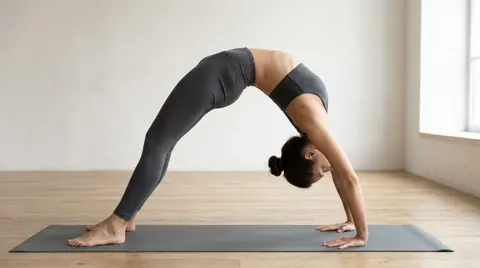
Wheel Pose (Urdhva Dhanurasana)
A full backbend in which the hands and feet press into the floor, the arms and legs straighten, the hips become the highest point and the head hangs between the arms.
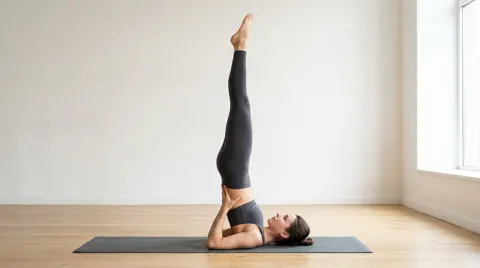
Shoulder Stand (Sarvangasana)
An inversion that begins the Ashtanga finishing sequence: lying on the shoulders with the body vertical, the hips stack over the shoulders, the legs reach straight up and the hands support the back.
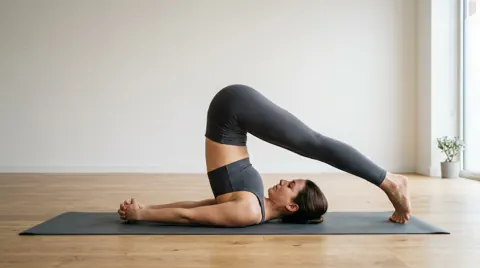
Plough Pose (Halasana)
An inversion from the Ashtanga finishing sequence: from Shoulder Stand, the straight legs lower over the head so the toes rest on the floor behind it, with the arms straight on the floor and the hands clasped.
Ear Pressure Pose (Karnapidasana)
An inversion from the Ashtanga finishing sequence: from Plough Pose, the knees bend down beside the ears with the shins on the floor and the arms behind the back.
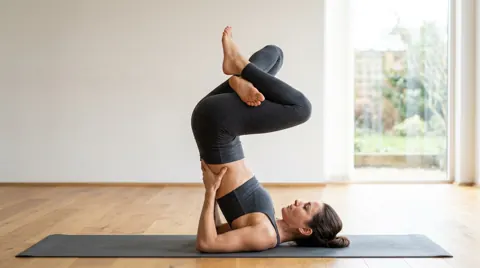
Upward Lotus (Urdhva Padmasana)
An advanced inversion from the Ashtanga finishing sequence: in Shoulder Stand the legs fold into full lotus with the knees pointing up, and the straight arms support the knees.
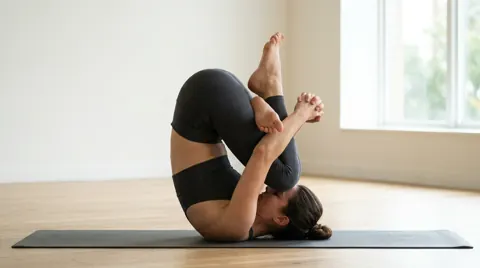
Embryo Pose (Pindasana)
An advanced inversion from the Ashtanga finishing sequence: from Upward Lotus, the lotus folds down towards the chest and the arms wrap around the thighs, forming a compact ball balanced on the shoulders.
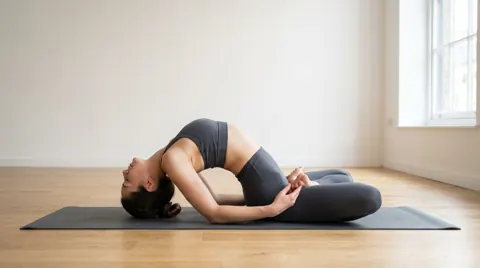
Fish Pose (Matsyasana)
A lotus-legged backbend from the Ashtanga finishing sequence: the chest lifts in a strong arch, the crown of the head rests lightly on the floor and the hands hold the feet.
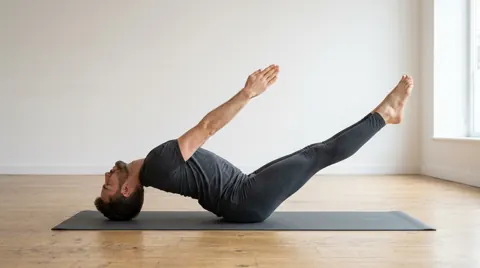
Uttana Padasana
A strong core and backbend pose from the Ashtanga finishing sequence: lying on the back with the chest arched and the crown on the floor, the straight legs and arms lift to about 45°.
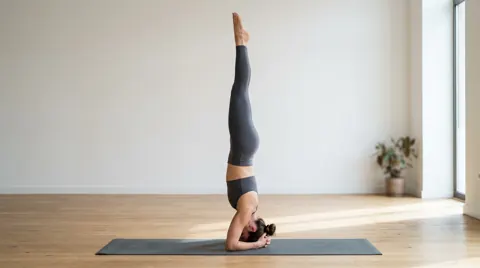
Headstand (Sirsasana)
An inversion balanced on the forearms and the crown of the head, with the hands clasped behind the head and the body straight and vertical from shoulders to feet.
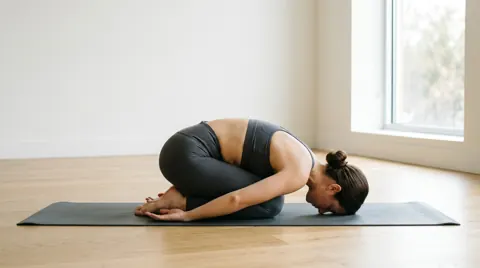
Child's Pose (Balasana)
A gentle resting pose: kneeling and sitting back on the heels, the forehead rests on the floor and the arms lie alongside the body.
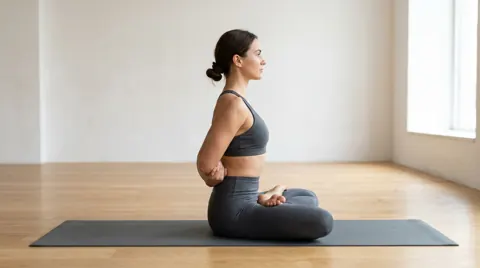
Baddha Padmasana
Bound Lotus: seated in full lotus with a tall spine, the arms cross behind the back and each hand holds the opposite foot.
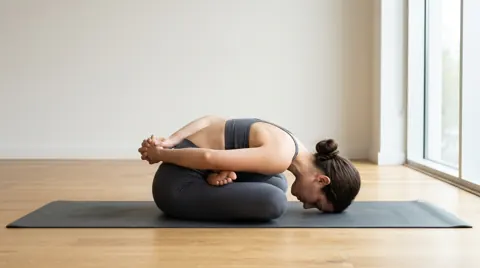
Yoga Mudra
A forward fold in Bound Lotus: seated in full lotus with each hand holding the opposite foot behind the back, the torso folds forward and the forehead lowers towards the floor.
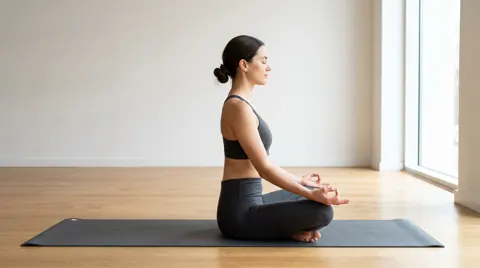
Lotus Pose (Padmasana)
A classic seated posture: in full lotus with the spine tall, the hands rest on the knees in Jnana mudra and the gaze is soft.
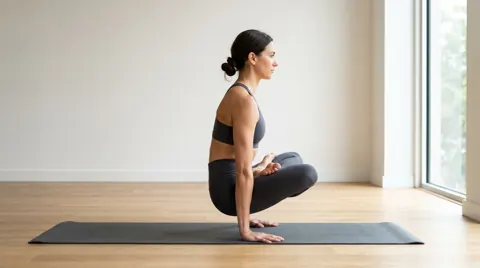
Utpluthih
Also called Tolasana (Scale Pose): in full lotus, the palms press into the floor beside the hips and the straight arms lift the whole body off the floor.
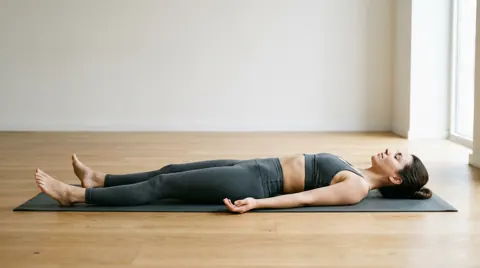
Corpse Pose (Savasana)
The final resting pose: lying flat on the back with the legs relaxed apart, the arms by the sides with the palms up and the eyes closed.
All levels More Poses
Lunges, seated and reclining poses, arm balances and inversion preparations from the wider pose library — from gentle restoratives to Crow and Forearm Stand prep.
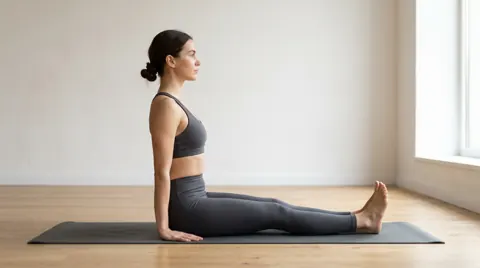
Staff Pose (Dandasana)
The foundation of the seated poses: sitting tall with both legs straight and together in front, the palms on the floor beside the hips.
Hero Pose (Virasana)
A kneeling seat: the knees together, the hips sit on the floor between the heels and the torso is upright, hands resting on the thighs.
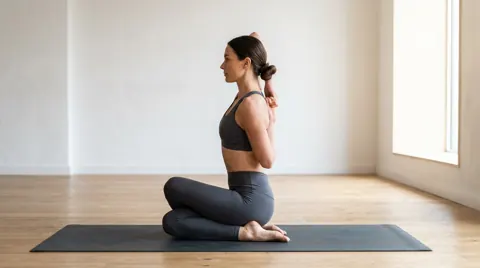
Cow Face Pose (Gomukhasana)
A seated pose with the knees stacked one on top of the other, while one arm reaches over the shoulder and the other behind the back so the hands clasp between the shoulder blades.
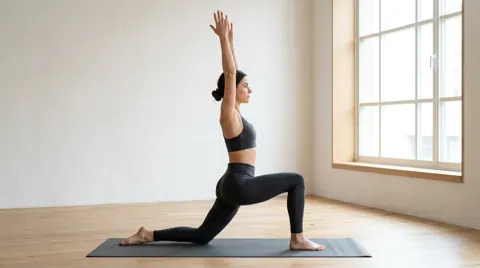
Low Lunge (Anjaneyasana)
A kneeling lunge: the front knee bends over the ankle, the back knee rests on the mat and the arms reach up overhead.
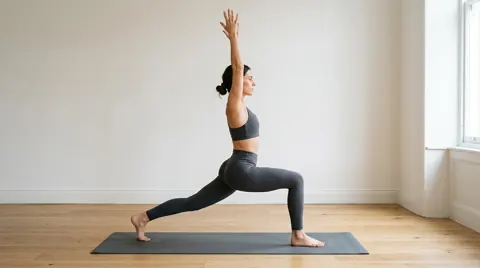
High Lunge (Ashta Chandrasana)
A standing lunge with the back knee lifted and the back leg long and strong, arms reaching overhead — builds leg strength, balance and length through the front of the hips.
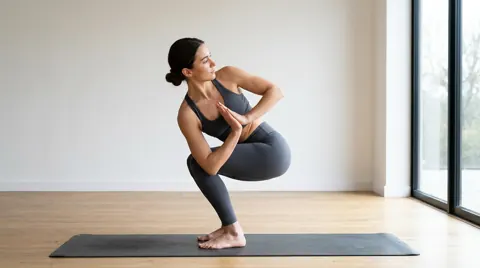
Revolved Chair (Parivrtta Utkatasana)
A twisting squat: from Chair Pose with the feet together, the torso twists so one elbow hooks outside the opposite knee, palms together at the chest.
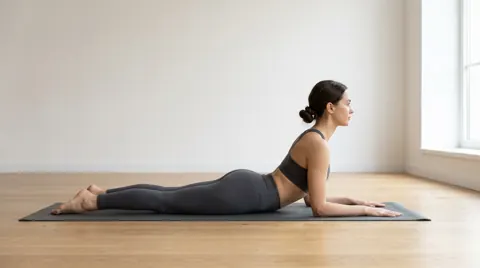
Sphinx Pose (Salamba Bhujangasana)
A gentle backbend lying on the belly, propped on the forearms with the elbows under the shoulders and the chest lifted.
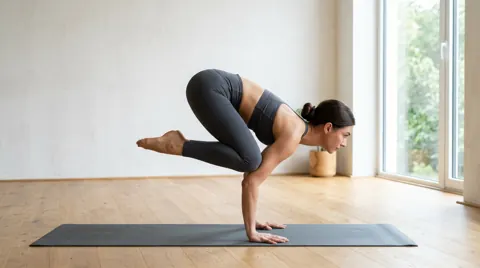
Crow Pose (Bakasana)
An arm balance: the palms press into the floor, the knees rest high on the backs of the upper arms and the feet lift off the floor.
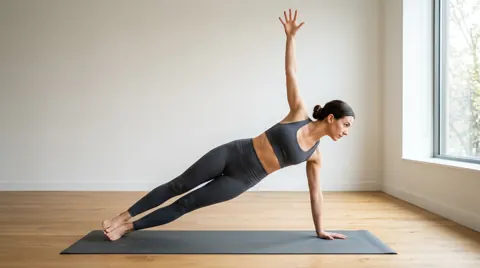
Side Plank (Vasisthasana)
A side-facing balance on one straight arm and the outer edge of the bottom foot, with the body in one straight line and the top arm reaching up.
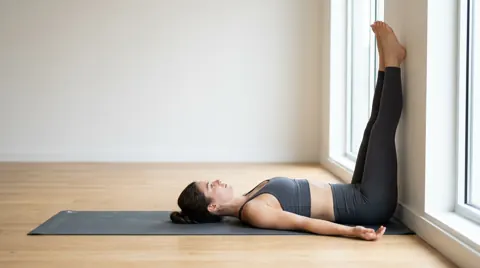
Legs-Up-the-Wall (Viparita Karani)
A restful inversion: lying on the back with the hips close to a wall and both legs resting straight up the wall.
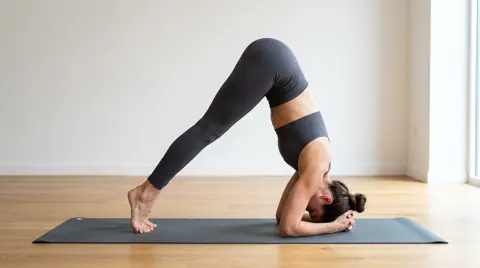
Headstand Prep (Salamba Sirsasana (prep))
The foundation for Headstand: forearms on the floor with the fingers interlaced, the crown of the head resting inside the hands and the hips lifted high over the shoulders, with the feet still on the floor.
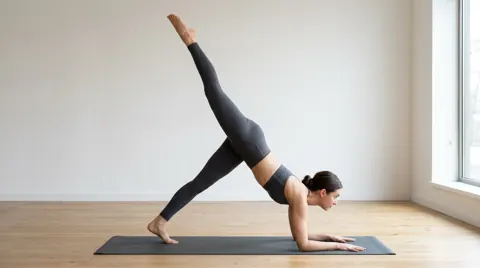
Forearm Stand Prep (Pincha Mayurasana (prep))
A preparation for Forearm Stand: from Dolphin, with the forearms parallel and the hips high, one leg lifts straight up towards the ceiling while the other foot stays on the floor.
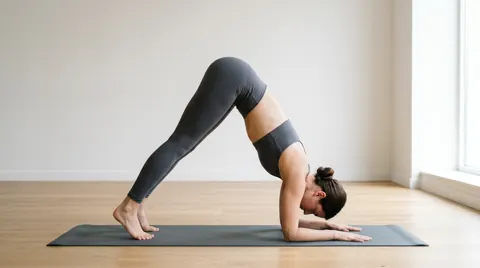
Dolphin Pose (Ardha Pincha Mayurasana)
A forearm version of Downward Dog: the forearms are parallel on the floor, the head hangs free between the arms and the hips lift high in an inverted V.
Reclining Bound Angle (Supta Baddha Konasana)
A restful hip opener: lying on the back with the soles of the feet together and the knees falling open towards the floor.
What Each Pose Includes
Step-by-Step Guide
Illustrated breakdown of how to get into the pose safely, with tips for each stage of the movement.
AI Real-Time Feedback
17-point body tracking with visual overlays showing exactly what to adjust as you hold the pose.
Benefits & Wellness Support
Learn how each pose may support strength, flexibility, mobility, balance, posture, body awareness, and relaxation.
Safety Precautions & Modifications
General safety precautions and modification guidance for each pose. CheckMyPose is a wellness tool, not medical advice.
Pose Guides
In-depth guides — steps, benefits, and alignment tips for every pose.
- Baddha Padmasana
- Big Toe Pose (Padangusthasana)
- Boat Pose (Navasana)
- Bound Angle Pose A (Baddha Konasana A)
- Bound Angle Pose B (Baddha Konasana B)
- Chair Pose (Utkatasana)
- Child's Pose (Balasana)
- Cobra Pose (Bhujangasana)
- Corpse Pose (Savasana)
- Cow Face Pose (Gomukhasana)
- Crow Pose (Bakasana)
- Dolphin Pose (Ardha Pincha Mayurasana)
- Downward-Facing Dog (Adho Mukha Svanasana)
- Eight-Point Salute (Ashtanga Namaskara)
- Embryo Pose (Pindasana)
- Equestrian Pose (Ashwa Sanchalanasana)
- Extended Hand-to-Big-Toe Pose (Utthita Hasta Padangusthasana)
- Extended Side Angle (Utthita Parsvakonasana)
- Extended Triangle Pose (Utthita Trikonasana)
- Fish Pose (Matsyasana)
- Forearm Stand Prep (Pincha Mayurasana (prep))
- Four-Limbed Staff (Chaturanga Dandasana)
- Half Bound Lotus Forward Bend (Ardha Baddha Padma Paschimottanasana)
- Half Bound Lotus Forward Fold (Ardha Baddha Padmottanasana)
- Half Lift (Ardha Uttanasana)
- Half Lord of the Fishes (Ardha Matsyendrasana)
- Hand Under Foot Pose (Padahastasana)
- Head-to-Knee Pose A (Janu Sirsasana A)
- Head-to-Knee Pose B (Janu Sirsasana B)
- Head-to-Knee Pose C (Janu Sirsasana C)
- Headstand (Sirsasana)
- Headstand Prep (Salamba Sirsasana (prep))
- High Lunge (Ashta Chandrasana)
- Humble Warrior (Baddha Virabhadrasana)
- Intense Side Stretch (Parsvottanasana)
- Legs-Up-the-Wall (Viparita Karani)
- Lotus Pose (Padmasana)
- Low Lunge (Anjaneyasana)
- Marichyasana A
- Marichyasana B
- Marichyasana C
- Marichyasana D
- Mountain Pose (Tadasana)
- Plank Pose (Phalakasana)
- Plough Pose (Halasana)
- Prasarita Padottanasana A
- Prasarita Padottanasana B
- Prasarita Padottanasana C
- Prasarita Padottanasana D
- Prayer Pose (Anjali Mudra)
- Raised Arms Pose (Hastauttanasana)
- Reclining Angle Pose (Supta Konasana)
- Reclining Hand-to-Big-Toe Pose (Supta Padangusthasana)
- Reverse Warrior (Viparita Virabhadrasana)
- Revolved Chair (Parivrtta Utkatasana)
- Revolved Side Angle Pose (Parivrtta Parsvakonasana)
- Revolved Triangle Pose (Parivrtta Trikonasana)
- Seated Forward Bend (Paschimottanasana)
- Setu Bandhasana
- Shoulder Stand (Sarvangasana)
- Shoulder-Pressing Pose (Bhujapidasana)
- Side Plank (Vasisthasana)
- Sphinx Pose (Salamba Bhujangasana)
- Staff Pose (Dandasana)
- Standing Forward Fold (Uttanasana)
- Three-Limbed Forward Bend (Tiriang Mukha Eka Pada Paschimottanasana)
- Tortoise Pose (Kurmasana)
- Tree Pose (Vrksasana)
- Ubhaya Padangusthasana
- Upward Lotus (Urdhva Padmasana)
- Upward Plank (Purvottanasana)
- Upward Salute (Urdhva Hastasana)
- Upward-Facing Dog (Urdhva Mukha Svanasana)
- Urdhva Mukha Paschimottanasana
- Utpluthih
- Uttana Padasana
- Warrior I (Virabhadrasana I)
- Warrior II (Virabhadrasana II)
- Warrior III (Virabhadrasana III)
- Wheel Pose (Urdhva Dhanurasana)
- Wide-Angle Seated Balance (Upavistha Konasana B)
- Wide-Angle Seated Forward Bend (Upavistha Konasana A)
- Yoga Mudra
Start Your Practice Now
Choose any pose above and get real-time AI feedback in seconds. No sign-up required.
Begin with Mountain Pose